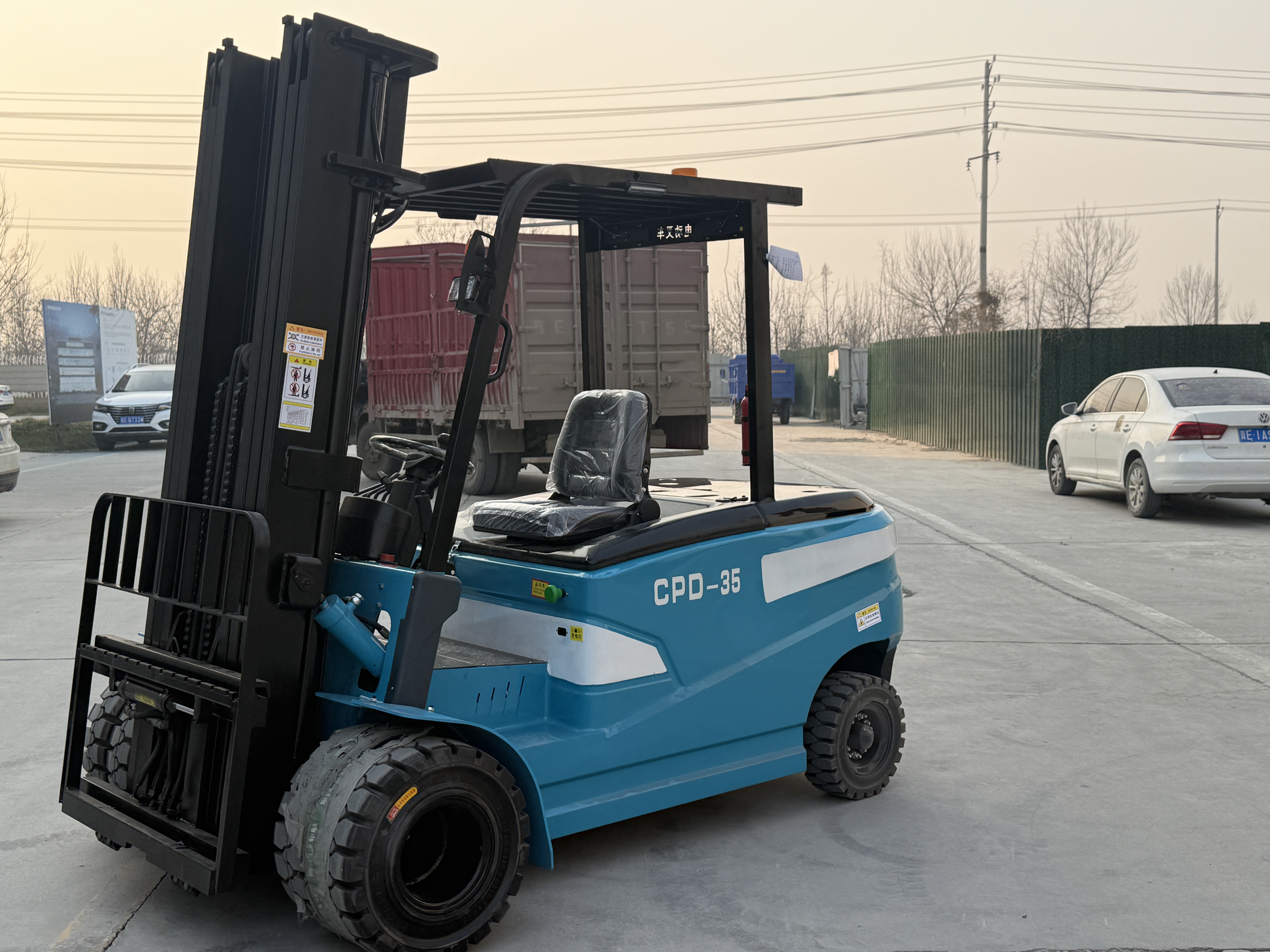
The fastest way to narrow down an electric forklift is to work from three numbers: the heaviest pallet you actually move, the width of your narrowest aisle, and the hours the truck runs per day. Start there, and the right capacity, battery and chassis usually become obvious before you compare prices.
Start with the rated capacity, not the biggest model
Rated capacity is the load a forklift can carry at a defined load center, usually 500 mm for counterbalance models. A 2-ton machine rated at 500 mm handles less when the pallet extends beyond that center, so state your loads in kilograms and measure the pallet depth, not just the total weight.
Gangchi builds the range from 1 ton to 5 tons, with standard 3-meter lifting height across the lineup and customizable dimensions on request. If your heavy line runs to roughly 1,500 kg, a 1.5-ton electric forklift gives you margin without paying for a larger frame.
Measure the aisle, then pick the chassis
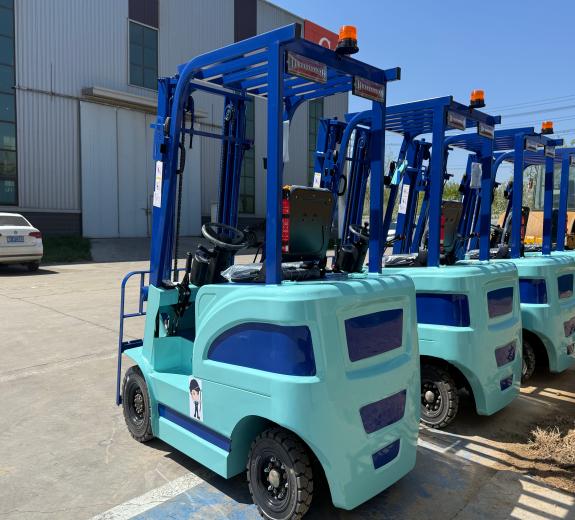
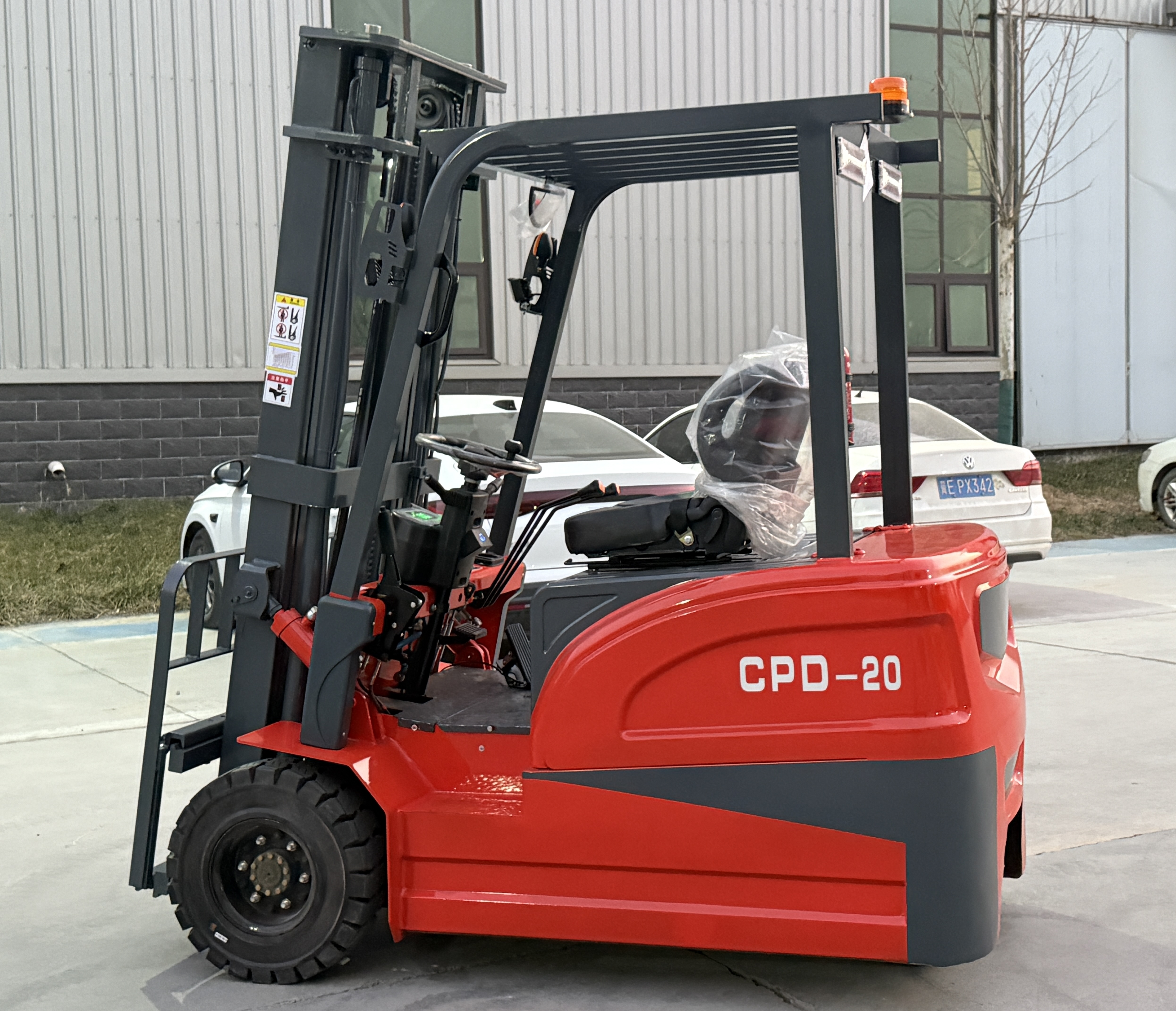
Three-wheel models turn tighter and suit narrow racks, while four-wheel trucks feel more stable on long runs and uneven floors. A 2-ton three-wheel electric forklift is a common choice for retail storage, whereas a four-wheel cast iron counterweight model fits general warehouse work where floors are consistent.
| Factor | Three-wheel | Four-wheel |
|---|---|---|
| Turning radius | Smaller, better in narrow aisles | Larger |
| Stability at full load | Good on smooth floors | More planted, better on rough ground |
| Typical use | Retail, 3PL, tight racking | General warehouse, light dock work |
Size the battery to the shift
A forklift that runs one shift needs less battery than one that runs back-to-back shifts with lunchtime charging. Gangchi offers both standard electric drive and models with larger battery options; the 5-ton cast iron counterweight model is configured with a 500 AH lithium battery for long operating windows.
Lithium batteries accept opportunity charging without the battery-swap routine that lead-acid packs require. If your operation runs 16 hours a day, plan the charging station layout before you finalize the truck count.
Check the motor and the duty cycle
All Gangchi models use brushless AC drive motors, which cut maintenance compared with older DC systems. The smaller trucks run 60 V drives; the 3.5-ton and 5-ton models step up to 80 V systems with higher drive power for heavier work.
Duty cycle means how often the mast lifts, lowers and travels in a shift. High-frequency stacking shortens battery life per shift, so count actual lifting events per hour rather than guessing from shift length.
Write the spec sheet before you ask for quotes
A short spec sheet avoids back-and-forth and makes supplier answers comparable. List the payload in kg, pallet dimensions, aisle width, lifting height, shift hours, floor type and whether the truck must fit through a specific door or into a container.
Send the same sheet to three factories and compare the machine dimensions they propose, not just the price. If your door is 2,300 mm wide, a truck with an overall width of 1,200 mm may still need a different mast clearance when loaded.
Frequently asked questions
What does rated capacity mean on an electric forklift?
It is the load the truck can carry at a set load center, normally 500 mm from the fork face. Longer or deeper loads reduce the safe capacity, so compare loads at the same load center.
How do I know whether I need 1 ton or 3 tons?
Weigh your heaviest standard pallet, add a safety margin of 15 to 20 percent, and check the pallet depth. If the heaviest load is 2,000 kg, a 2-ton model is the starting point.
Are three-wheel forklifts as stable as four-wheel models?
Three-wheel trucks are stable at their rated load on smooth, level floors. Four-wheel models add stability on uneven surfaces and at full lifting height, which is why docks and outdoor yards usually pick four-wheel.
Should I choose lithium or lead-acid?
Lithium supports opportunity charging and longer runtimes between charges; lead-acid costs less up front but needs battery swapping or dedicated charging windows. Match the choice to your shift pattern.
Can the lifting height be customized?
Yes. Gangchi standard models ship with a 3-meter mast, and lifting height and body dimensions can be adjusted for your rack layout. Confirm the final mast height against your top beam before ordering.
How many forklifts do I need for a two-shift warehouse?
Count working hours per truck per day and compare with battery runtime. Two shifts usually means either two trucks with fast charging or one truck with a battery swap plan; your duty cycle decides which.
Before you request quotes, put together the spec sheet described above. Send it through the inquiry form with your pallet weights, aisle widths, shift hours and target capacity, and compare the machine dimensions and battery options each supplier proposes.