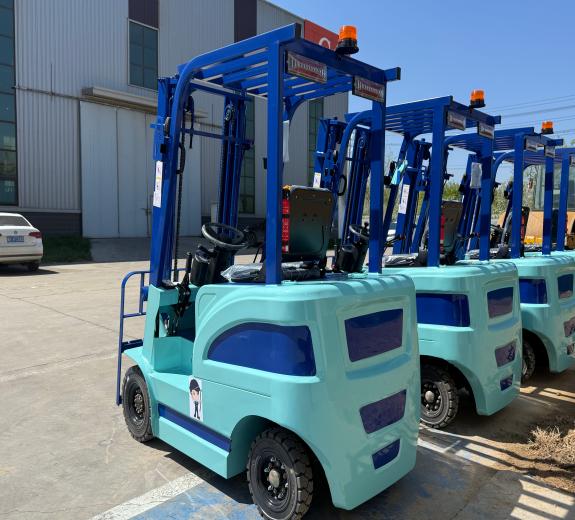
A forklift that performs well at room temperature can behave differently below freezing, and the differences sit in four places: battery, hydraulics, tires and operator environment. None of them are reasons to avoid electric trucks in cold storage, but each one changes what you should specify and how you should charge the fleet.
Battery behavior below freezing
Low temperature slows the chemical reactions inside a battery, which reduces the usable capacity during a shift and can shorten the pack's life if the truck is charged while frozen. The practical rule is to charge batteries where the temperature is above freezing and to size the pack for the cold-shift draw, not the warm-shift draw.
Ask the battery maker for the discharge performance at your actual cold-room temperature and for the minimum charging temperature in writing. If the trucks run long freezer shifts, a larger pack or a lithium option, like the 500 AH lithium configuration on the Gangchi 5-ton cast iron counterweight model, reduces the number of charging stops.
Hydraulics and condensation
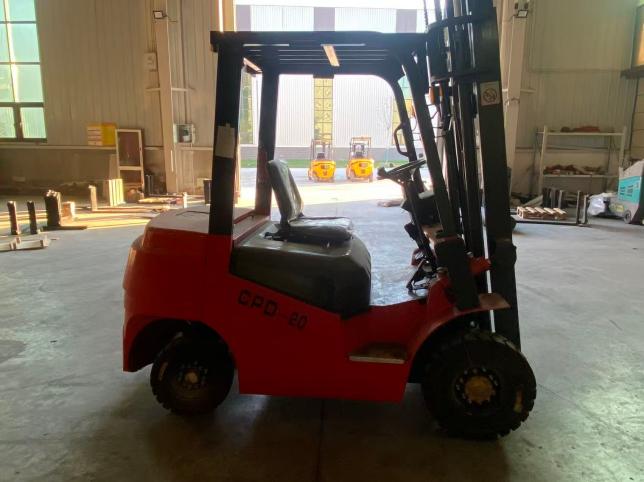
Hydraulic oil thickens as it cools, which slows lift and tilt response until the system warms up. Some operators leave the truck running or cycle the mast a few times at the start of a shift; the supplier can advise on the correct cold-weather oil grade for your climate.
Condensation is the quieter problem. Every time a warm truck enters a cold room, moisture settles on electrical contacts, connectors and the mast structure. Keep electrical enclosures sealed, dry the truck at the dock door when possible, and include contact inspection in the maintenance schedule.
Tires and traction on wet floors
Cold rooms often combine ice, condensation and polished concrete, so tire compound matters more than in a dry warehouse. Ask the supplier which tire options are suited to wet, cold floors and confirm the climbing and braking behavior at your floor conditions.
Gangchi models ship with front and rear solid wear-resistant tires as standard on most configurations, with pneumatic tires on the heavy cast iron counterweight models. Confirm the tire type against your floor surface and temperature before finalizing the order.
The operator environment is part of the spec
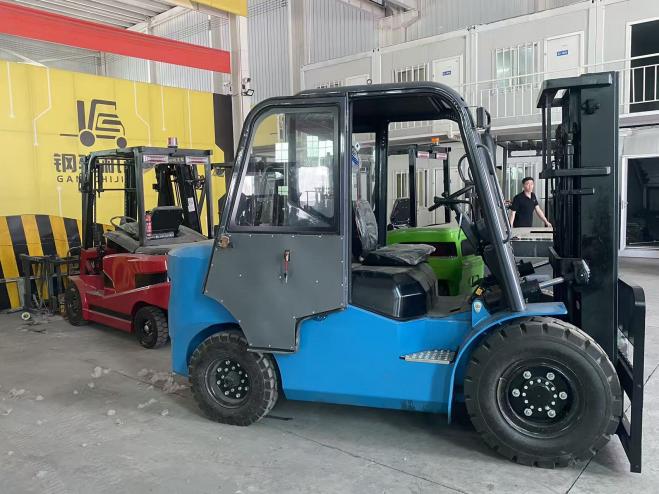
A driver who spends a full shift below freezing works slower and less carefully, which costs more than any option on the truck. Enclosed cabs, heating, heated seats and clear windows reduce mistakes and improve cycle times.
If the truck moves between a cold room and a warm dock, plan a vestibule or a warm-up point, and include the driver's rotation in the shift schedule. These are facility decisions, but they belong in the same budget as the forklift itself.
| Component | What changes below freezing | What to specify |
|---|---|---|
| Battery | Lower usable capacity, slower charging | Larger pack, cold-rated charging area |
| Hydraulics | Thicker oil, slower response | Cold-weather oil grade, warm-up routine |
| Tires | Less grip on wet, icy floors | Cold-floor tire compound |
| Operator | Slower, less careful work | Cabin, heating, rotation plan |
Frequently asked questions
Can lithium batteries be charged in a freezer?
Most battery makers specify a minimum charging temperature, and charging a frozen pack can damage it. Confirm the minimum charging temperature with the battery maker and charge in an area that meets it.
Do electric forklifts lose range in cold storage?
Usable capacity typically drops as temperature falls because the chemistry slows. Size the pack for the cold-shift draw and keep the charging area above freezing to limit the loss.
Do I need special tires for a freezer warehouse?
Ask the supplier for a tire compound suited to wet, cold floors. Standard solid tires work on many cold floors, but traction on ice and condensation should be confirmed against your actual conditions.
Should I run the forklift to warm the hydraulics?
Some operators cycle the mast a few times at the start of a shift to warm the hydraulic oil. Follow the supplier's recommendation for the oil grade and warm-up procedure for your climate.
Which Gangchi model fits a freezer operation?
The choice depends on your payload and shift length. The 2-ton cast iron counterweight model suits stable four-wheel work on consistent floors, and the 5-ton model offers the lithium option for long shifts. Confirm the battery and tire spec against your cold-room conditions.
When you source forklifts for a cold warehouse, send the payload, shift length, room temperature and floor type through the inquiry form, and ask each supplier to confirm battery charging temperature, oil grade, tire compound and operator options in writing. The answers tell you which supplier actually works with cold storage, and which one is quoting from a catalog.