
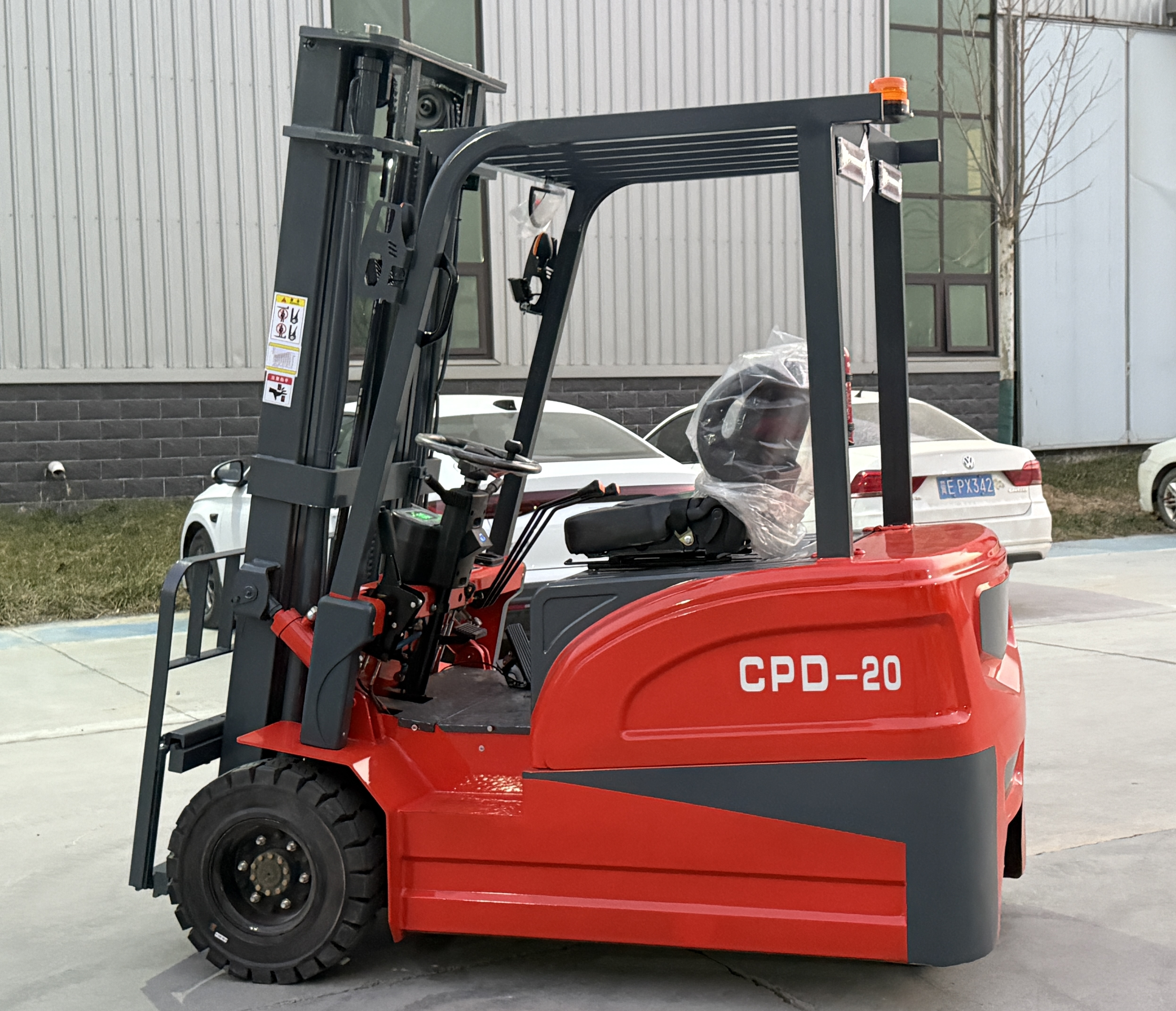
Choose the chassis after you measure the aisle, not before. Three-wheel electric forklifts turn in tighter spaces and suit narrow racking and retail storage; four-wheel models carry more stability on longer runs and less even floors. Both are available at 2 tons in the Gangchi lineup.
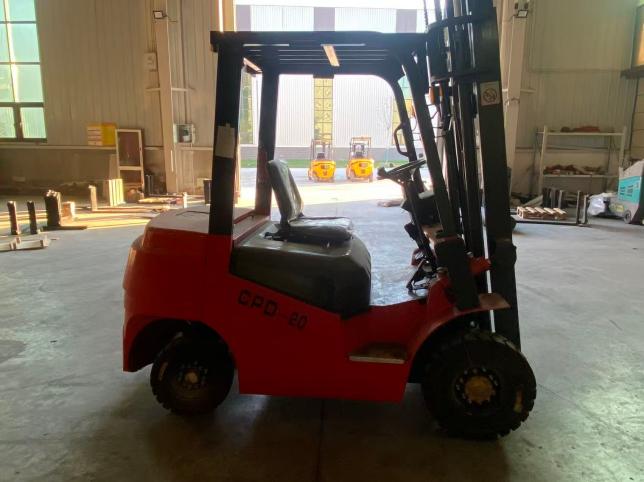
Turning radius changes the aisle math
Three-wheel trucks steer with the rear drive wheel, which cuts the turning radius noticeably. If your narrowest aisle is under 3 meters, the 2-ton three-wheel electric forklift often fits where a four-wheel model cannot complete a 90-degree pallet turn.
Walk the warehouse and measure the tightest aisle and door opening, then compare the published turning radius of each chassis against that number plus a working clearance of 200 to 300 mm.
Stability and floor conditions
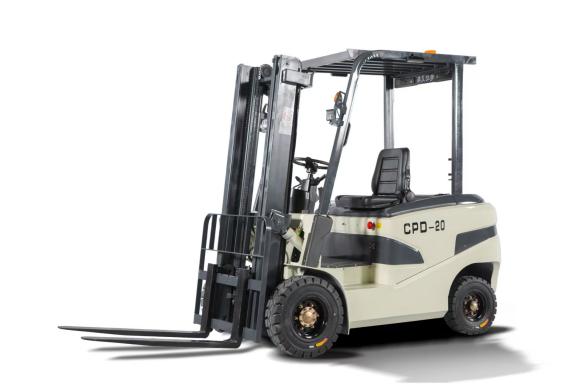
Four-wheel trucks spread the load over two front wheels, which feels more stable with heavy pallets and on cracked concrete or dock plates. The 2-ton cast iron counterweight four-wheel model adds mass low in the frame for heavy pallet work.
Three-wheel models are stable at rated load on smooth, level floors. If your floor has expansion joints, debris or slopes, budget for the four-wheel version even if the turning radius looks attractive.
| Criteria | Three-wheel | Four-wheel |
|---|---|---|
| Narrow aisles | Better | Workable but wider turns |
| Rough floors | Less ideal | More stable |
| Dock work | Possible | Preferred |
| Heavy continuous duty | Light to medium | Medium to heavy |
Tire type follows the chassis
Cushion tires suit smooth indoor floors on both chassis types; pneumatic tires handle outdoor and uneven surfaces. Confirm the tire spec with the supplier for your floor type, and remember tires are a consumable cost in the operating budget.
Frequently asked questions
Is a three-wheel forklift less safe than four-wheel?
At its rated capacity on level ground, a three-wheel truck is safe and maneuverable. The stability difference appears on uneven floors and at full lift height, where four-wheel has an edge.
Can a three-wheel forklift work on a loading dock?
It can manage light dock work on smooth surfaces. For frequent dock use with heavy loads, a four-wheel model is the safer choice.
How much aisle width does a 2-ton three-wheel forklift need?
The exact figure depends on pallet length and mast width. Measure your pallet and compare with the truck's turning radius; most operators add 200 to 300 mm of clearance.
Do three-wheel forklifts cost less?
Purchase price is often similar to four-wheel at the same capacity. The real decision is maneuverability versus stability in your specific aisles.
Which chassis is better for a retail stockroom?
Retail stockrooms usually favor three-wheel for tight aisles and lighter loads, provided the floors are smooth and level.
Measure your narrowest aisle and note the floor condition, then send both to the inquiry team with your pallet size and shift hours. Request the turning radius and tire spec for both chassis at your capacity, and the right one usually selects itself.