
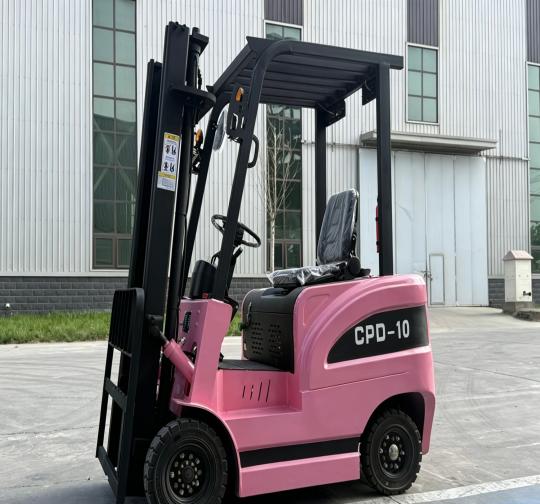
Capacity ratings on electric forklifts assume a defined load center, normally 500 mm. A 1-ton truck and a 5-ton truck are built for different pallet sizes and mast heights, so match the tonnage to the heaviest load, the load center and the top rack height in your facility.
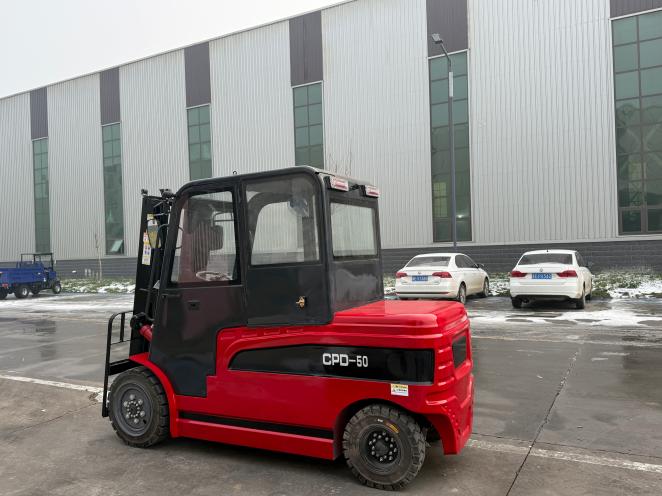
What the tonnage number really means
The tonnage is the maximum load at the rated load center, typically 500 mm from the vertical face of the forks. Move the load center further out, and the safe capacity drops because the moment on the mast increases.
Measure your pallets. A standard 1,200 x 1,000 mm pallet loaded to 2,000 kg sits well inside a 500 mm load center for a 2-ton model, while a long 1,800 mm pallet shifts the center out and may push you to a larger truck.
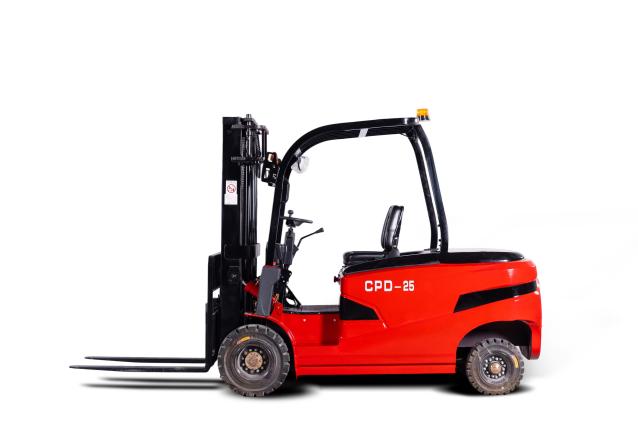
Where each tonnage fits
| Model | Rated capacity | Typical work |
|---|---|---|
| 1 ton | 1,000 kg | Light picking, small parts, retail storage |
| 1.5 ton | 1,500 kg | General warehouse pallet work |
| 2 ton | 2,000 kg | Standard palletized goods, 3PL |
| 2.5 ton | 2,500 kg | Heavier pallets, dense materials |
| 3 ton | 3,000 kg | Machinery, building materials |
| 3.5 ton | 3,500 kg | Cast-iron counterweight, heavy loads |
| 5 ton | 5,000 kg | Yard work, heavy equipment handling |
Gangchi covers this full range, from a 1-ton electric forklift up to a 5-ton cast iron counterweight model with a 500 AH lithium battery.
Lifting height and mast stiffness
Higher lifting height increases the moment arm, so a truck rated for 3 tons at 3 meters may carry less at 6 meters. All Gangchi standard models ship with a 3-meter mast, and lifting height is customizable to match your racking.
When you compare quotes, ask for the capacity chart at your exact lifting height, not just the headline tonnage. Two suppliers quoting the same tonnage may propose different mast sections and residual capacities.
The 15 percent rule for safety margin
Buyers commonly add 15 to 20 percent over the heaviest measured load to cover pallet variation and operator habits. If your heaviest pallet is 1,700 kg, a 2-ton truck is the sensible starting point rather than a 1.5-ton model running near its limit all day.
Also weigh the attachments. Fork extensions, clamps and side shifters each add weight and shift the load center, so tell the supplier about any attachment you plan to use.
Frequently asked questions
Can a 1-ton forklift lift 1,500 kg?
No, not safely. The rated capacity is the ceiling at the specified load center; exceeding it risks tip-over and mast damage. Choose the next size up when loads approach the rating.
Does load center affect capacity on all forklifts?
Yes. Longer or deeper loads move the center of gravity away from the mast, which reduces the safe capacity on every counterbalance forklift, regardless of brand.
What is the difference between 3 tons and 3.5 tons?
500 kg of rated capacity, plus a heavier frame and larger drive system. The 3.5-ton cast iron counterweight model uses an 80 V 15,000 W drive, suited to loads where the extra margin matters.
How do I measure my pallet load center?
Measure from the vertical face of the fork to the center of gravity of the load, usually the middle of the pallet. Compare that distance with the rated load center in the specification.
Do I need a 5-ton forklift for occasional heavy lifts?
If the heavy loads are rare, a rental or a lighter model may cover 95 percent of the work. If heavy lifts happen daily, size the fleet for the heaviest recurring job.
Share your pallet weights, pallet dimensions and top rack height with the inquiry team, and ask for the capacity chart at your lifting height so the tonnage you order matches the job, not just the price list.